A workable contrast therapy setup pairs a 6 kilowatt sauna heater with a basic chilled tub, for a combined cost of roughly $2,500 to $5,000 before electrical work, and follows a simple pattern of 15 to 20 minutes of heat followed by 2 to 4 minutes of cold water. Neither side needs to be elaborate to work: a correctly sized heater and a well-filtered tub of consistently cold water cover most of what a home contrast routine actually needs.
1. Size the Heater for Repeated Sessions, Not a Single Sit
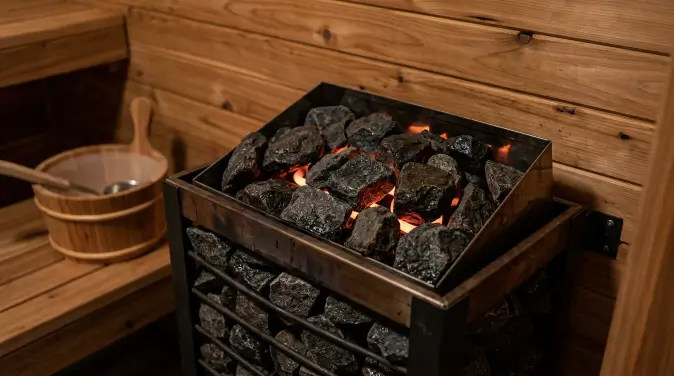
Contrast therapy usually means longer or repeated heat exposure compared to a single relaxed sauna session, so size the heater with a small margin above the bare cubic-footage minimum. The standard formula of roughly 1 kilowatt per 45 to 60 cubic feet still applies, but rounding up rather than down keeps the cabin recovering heat quickly between the hot and cold rounds of a contrast sequence. A 6 by 6 foot cabin that calculates to a 5 kilowatt minimum performs noticeably better at 6 kilowatts once a routine involves stepping out to cold water and back in twice in one session.
2. Decide Between a Chiller and Ice Before Pricing the Cold Side
A dedicated chiller unit holds water at a consistent 39 to 55 degrees Fahrenheit on demand and filters it between uses, which matters for anyone using the tub several times a week, but adds $1,500 to $3,500 to the project depending on tub size and chiller capacity. Filling a stock tank with ice before each session costs far less upfront, often under $500 for the tub itself, but means buying or making ice regularly and accepting less consistent water temperature from one session to the next. Neither approach is wrong; the choice mostly comes down to how often the routine will actually get used and whether consistent temperature matters more than upfront cost.
3. Plan Both Circuits on One Electrical Quote
A heater above 6 kilowatts typically needs its own dedicated 240-volt circuit, and a plunge chiller commonly runs on a separate dedicated line of its own rather than sharing capacity with the heater. Pricing both circuits together, in a single electrician’s visit, usually costs less than treating them as two separate projects months apart, since a single trenching or conduit run can sometimes serve both units if they sit near each other. Skipping this planning step is how a contrast setup ends up with a heater installed correctly and a chiller running on an extension cord, which is neither safe nor code-compliant.
4. Build a Simple, Repeatable Sequence
A common contrast pattern runs 15 to 20 minutes in the heat, stones fully warmed and the cabin at 170 to 180 degrees, followed by 2 to 4 minutes in cold water, sometimes repeated for a second round. There is no single verified ideal ratio between the two, and most people adjust the exact timing based on how the body responds rather than following a fixed protocol. Starting with a shorter cold exposure, closer to 60 to 90 seconds, and building up gradually over several weeks is a reasonable way to get used to the cold side without cutting the routine short out of discomfort.
5. Compare Full Setups Before Buying Piece by Piece
Buying a heater from one source and a plunge tub from another can work, but comparing bundled or matched setups from a specialty retailer, including Sweat Decks, makes it easier to check that heater output and tub capacity are reasonably matched before committing to either piece. A heater sized for a large cabin paired with a small single-person plunge tub, or the reverse, often means one half of the setup gets far more use than the other, which is a common and avoidable mismatch in a first-time contrast therapy build.
What Does the Evidence Actually Say About Combining Heat and Cold?
The cardiovascular evidence behind sauna bathing is stronger and more consistent than the evidence for pairing it with cold exposure. A large Finnish cohort study found that men who used a sauna four to seven times a week had lower rates of fatal cardiovascular events and all-cause mortality compared with once-a-week users, an association that held after adjusting for other risk factors. A related study looked at how sauna bathing and cardiorespiratory fitness jointly relate to mortality risk over a long-term follow-up, finding the combination associated with better outcomes than either factor alone. A shorter-term study measured blood-based cardiovascular markers in sauna users and found favorable short-term changes after repeated sessions. The evidence on cold-water immersion specifically is more mixed: cold exposure soon after resistance training has been shown in some trials to blunt strength and muscle-building adaptations, so anyone lifting weights seriously should think about timing cold plunges away from training sessions rather than treating heat and cold as interchangeable recovery tools.
See also: Workplace EV Charging Solutions: Complete Guide for Businesses
What Should First-Timers Expect From the Cold Side?
The first cold plunge after a hot sauna session is the hardest part of the routine for almost everyone, and the instinct to gasp or breathe quickly in the first ten to fifteen seconds is a normal reflex rather than a sign anything is wrong. Slow, controlled breathing through the first minute makes a bigger difference than water temperature itself, and easing in gradually rather than jumping tends to work better for a first attempt than committing to a full plunge immediately. Entering and exiting on a non-slip surface matters as much for safety as any other part of the setup, since a wet deck next to a cold tub is a common place for a fall, particularly right after stepping out of the heat when balance and reaction time are briefly reduced. Building tolerance over several weeks, rather than expecting full comfort on the first attempt, is the realistic timeline most people actually experience.
Frequently Asked Questions
What is a reasonable budget for pairing a sauna heater with a cold plunge? A 6 kilowatt electric heater plus a basic chilled tub setup typically runs $2,500 to $5,000 combined, before electrical work.
How long should a contrast therapy session last? A common pattern is 15 to 20 minutes in the heat followed by 2 to 4 minutes in cold water, sometimes repeated for one more round.
Does cold plunging after a sauna session cancel out the benefits? Not for cardiovascular-focused use, but cold water can blunt strength and muscle-building adaptations when done soon after resistance training specifically.
Do the heater and the chiller need separate electrical circuits? In most setups, yes. Both should be priced into the same electrical quote before ordering either unit.
References
- Association between sauna bathing and fatal cardiovascular and all-cause mortality events, JAMA Internal Medicine, 2015
- Joint associations of sauna bathing and cardiorespiratory fitness on cardiovascular and all-cause mortality risk: a long-term prospective cohort study, Annals of Medicine, 2018
- Short-term effects of Finnish sauna bathing on blood-based markers of cardiovascular function in non-naive sauna users, Heart and Vessels, 2018
By Dominic Farrow